
MLB NRFI Picks: Identifying Value in First Inning Betting Markets
 Available in US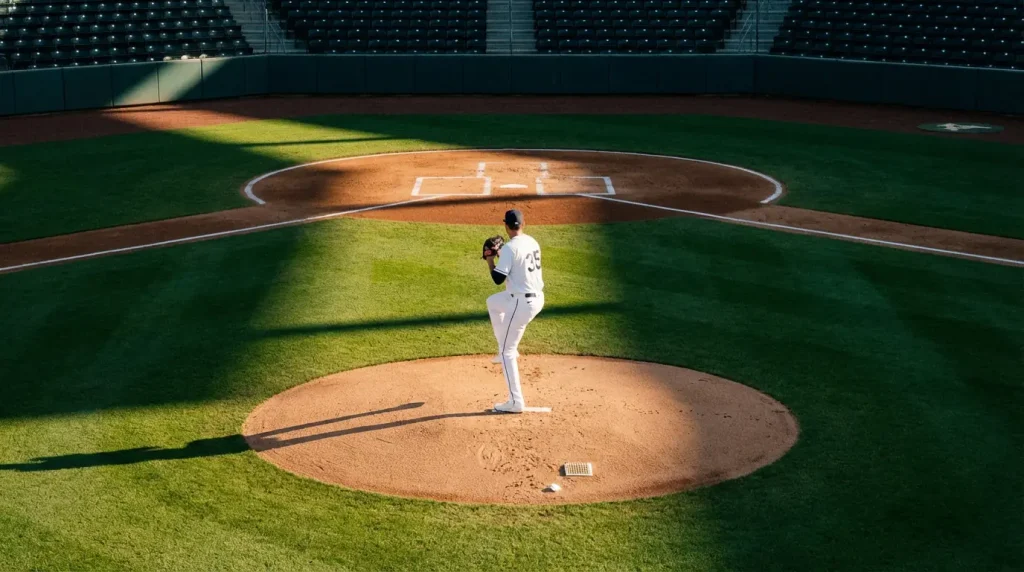
NRFI — No Run First Inning — became my go-to market during the 2022 season, and the reason was almost embarrassingly simple. I noticed that most starters are at their sharpest in the opening frame. Velocity peaks, sequencing is fresh, and lineups have not yet timed the pitcher’s movement. That first-inning advantage is measurable, repeatable, and, best of all, routinely underpriced by bookmakers who set NRFI lines based on aggregate scoring data rather than inning-specific performance.
The pitch clock, introduced in 2023, brought average game time down to 2 hours 36 minutes — the shortest since 1984. That pace change also compressed the rhythm of early innings, giving starters less time to overthink and lineups less time to adjust between at-bats. The result, from what I have tracked, is a slight increase in first-inning efficiency for strong starters, which is good news for NRFI bettors who know where to look.
DiamondEdge NRFI Betting Mechanics
The proposition is dead simple: will either team score a run in the top or bottom of the first inning? If neither team scores, NRFI wins. If either team pushes across even one run, YRFI — Yes Run First Inning — wins. Settlement happens within the first 20 minutes of the game, which is part of the appeal. You know the result quickly, there is no bullpen variance to worry about, and the entire bet hinges on a narrow, researchable window of play.
NRFI pricing typically sits in the -120 to -140 range on the American line, which converts to roughly 1.71 to 1.83 in decimal odds. That implies a 55-58% expected hit rate for NRFI. From my records across four seasons, well-selected NRFIs hit at around 62-64%, which means the market undervalues certain matchups consistently. The edge is not enormous on any single bet, but across a season with 2,430 regular-season games and dozens of high-confidence spots, it compounds into meaningful profit.
The structural appeal is also psychological. NRFI bets resolve fast, freeing your bankroll and mental energy for later in the day. I often use NRFI as the first leg of my daily betting, settling it before most evening games even begin. That quick resolution helps with discipline — there is no overnight anxiety, no waiting for a west coast game to finish at 3am UK time.
Identifying Pitchers With Low First-Inning Scoring Rates
Not all starters are created equal in the opening frame, and the gap between the best and worst first-inning performers is wider than most bettors assume. Some pitchers routinely cruise through the first on nine or ten pitches. Others labour, walk the leadoff man, and find themselves in trouble before they have settled. First-inning ERA is the blunt instrument here, but I prefer a more granular view: first-inning OPS against, which tells me how much damage hitters are doing on the contact they make in that opening half.
I maintain a list of about 40 starters who grade out as elite first-inning performers, updated monthly. The common traits are a high first-pitch strike rate — 65% or above — and a low walk rate in the first inning. A pitcher who throws strike one consistently puts the batter on the defensive immediately, which reduces the probability of a first-inning rally. Walk rate matters because a first-inning walk is disproportionately damaging. With the top of the order batting, a free baserunner often comes around to score.
One thing I have learned through trial and error: career first-inning data is more useful than recent-season data for this market. Pitchers tend to be consistent in their opening-frame tendencies year over year. A starter who has been sharp in the first inning across three or four seasons is unlikely to suddenly become a liability there. Recent form matters for overall game projections, but first-inning patterns are sticky. Use career data as your base and adjust only for significant changes — a new pitch added, a velocity drop, a mechanical adjustment flagged by analysts.
Lineup Construction, Ballpark and Time of Day as NRFI Filters
Historically, MLB favourites win about 57.5% of games, which tells us the league is competitive enough that even strong teams lose four out of ten. That parity extends to the first inning — no lineup is automatic for runs in any given frame. But some lineups are more dangerous than others, and ignoring lineup construction when betting NRFI is a mistake I made early and corrected fast.
The top of the order drives first-inning scoring. Lineups with elite leadoff hitters — high OBP, good speed, aggressive early in counts — are NRFI threats regardless of who is pitching. I cross-reference the opposing team’s 1-2-3 hitters against the starting pitcher before every NRFI play. If the top three have strong platoon-side numbers against the starter, I pass on the bet no matter how good the pitcher’s first-inning data looks. One bad matchup at the top of the order is enough to sink an NRFI.
Ballpark matters less for NRFIs than for game totals, but it is not irrelevant. At hitter-friendly parks with short fences — think Fenway’s right field or Yankee Stadium’s short porch — a single mistake pitch can leave the yard. At spacious pitcher’s parks, a mistake pitch might result in a fly out. I give a slight discount to NRFIs at extreme hitter’s parks and a slight premium at confirmed pitcher’s parks, though this adjustment is secondary to the pitching matchup itself.
Time of day is an underappreciated filter. Day games, particularly those starting at 1pm or 2pm local time in the US, often feature adjusted lineups with resting regulars. Those thinner lineups reduce first-inning scoring probability. Night games with full-strength lineups on both sides carry more first-inning risk. UK bettors have an interesting structural advantage here: many day games in the US start at 6pm or 7pm BST, which is a comfortable early-evening window for research and placement.
YRFI as the Contrarian Play: When to Flip the Script
I would be doing you a disservice if I only talked about NRFI without addressing its mirror image. YRFI — betting that at least one team scores in the first inning — is the contrarian play, and it has its moments. The best YRFI spots share a common profile: two back-end starters with poor first-inning numbers, a hitter-friendly park, and a top-of-the-order loaded with high-OBP bats.
YRFI pricing typically sits around +110 to +130 in American odds, meaning the bookmaker expects it to hit less often than not. When my analysis suggests a 50% or higher probability of first-inning scoring — based on pitcher profiles and lineup quality — a YRFI at plus-money becomes a genuine value bet. I bet YRFI far less frequently than NRFI, maybe once or twice a week compared to three or four NRFIs, but my YRFI win rate has actually been higher because I am far more selective with it.
The discipline with both sides of the first-inning market is the same: specificity over volume. I never bet NRFI or YRFI on every game of the slate. Some days I have three strong NRFI spots. Some days I have one YRFI and nothing else. And some days, when the matchups are ambiguous and the edge is thin, I bet none at all. The run line market and other full-game bets will still be there when the first-inning dust settles.
Prepared by the DiamondEdge editorial staff.
