
MLB London Series 2026: Event Schedule and UK Betting Markets
 Available in US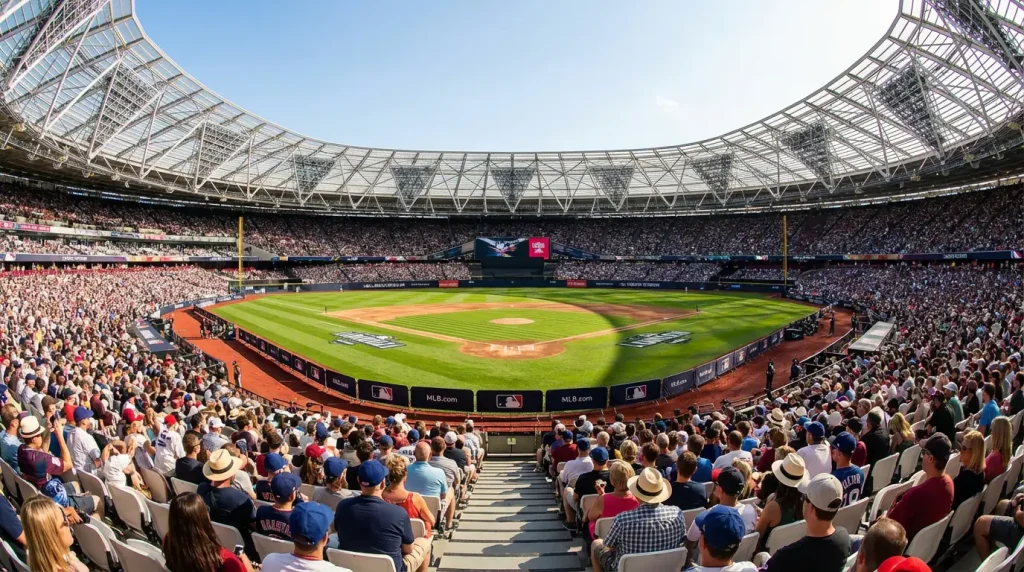
I was at the London Stadium for the 2024 London Series, squeezed between a family from Essex who had never watched a baseball game and a group of American expats in full Phillies gear. The atmosphere was electric — 108,956 people attended across the two games, and the energy in the stands felt nothing like a regular-season MLB game in the States. It felt like an event. That weekend confirmed something I had suspected for years: baseball is finding its audience in the UK, and the London Series is the engine driving that growth.
For UK bettors, the London Series is not just a spectacle. It creates a unique betting environment — neutral-site games with unusual dynamics that the market often misprices. Understanding the history, the fan growth trajectory, and the specific betting angles these games produce gives you a genuine informational advantage over bettors who treat them as ordinary regular-season fixtures.
MLB London Series Matches and Odds
MLB first brought regular-season games to London in 2019, when the Yankees and Red Sox played two games at London Stadium. The event drew massive crowds and proved that the appetite existed. After a pandemic-forced pause, the series returned in 2023 with the Cardinals and Cubs, and again in 2024 with the Mets and Phillies. That 2024 edition drew 108,956 total attendance across two games, averaging roughly 55,000 per game — numbers that rival many postseason crowds in the US.
The economic impact has been substantial. The 2024 series generated approximately $67 million for London’s economy, up from $56.5 million equivalent the previous year. MLB has committed to continuing the London Series as an annual fixture, and Chris Marinak, MLB’s Chief Operations and Strategy Officer, has called the UK a “priority market” for the league’s international growth. That institutional commitment means the series is not a novelty act — it is a strategic investment that will shape how British fans engage with baseball for years to come.
Each edition of the London Series has featured different teams, which broadens exposure across MLB’s fanbase and prevents the series from becoming associated with any single franchise. The selection of teams for 2026 follows this pattern, bringing fresh matchups to a UK audience that is increasingly knowledgeable about the sport.
How the London Series Is Growing UK Baseball Fandom
The numbers behind UK baseball growth are striking. MLB’s social media accounts across Europe tripled their follower count from 2019 levels, reaching over 452,000 subscribers with a 133% year-on-year surge. Merchandise sales in the UK jumped 43% after the 2023 London Series. And perhaps the most telling statistic: approximately 71% of London Series attendees were British residents, not American expats. The audience is homegrown.
Interest in baseball among UK sports fans rose from 4% in 2019 to 5.9% by 2023. That might sound modest in absolute terms, but the trajectory matters. A near-50% increase in interest over four years, driven primarily by a single annual event and expanding media coverage, suggests the growth curve is steepening rather than plateauing. Commissioner Rob Manfred has noted that MLB’s fanbase in the UK has doubled since 2019, and the league is investing in grassroots programmes, youth academies, and media partnerships to sustain that momentum.
For bettors, the growing fanbase has a practical implication: UK bookmakers are responding with deeper MLB coverage. Five years ago, finding run line and player prop markets on MLB at UK operators was difficult. Today, the major UK-licensed bookmakers offer comprehensive MLB markets, including live betting, same game parlays, and futures. That improvement in market depth is a direct consequence of rising UK demand, fuelled substantially by the London Series visibility.
Unique Betting Angles at Neutral-Site London Games
London Series games are not normal regular-season games, and betting them as if they were is a mistake I see repeatedly. Several factors make these fixtures distinctive from a betting perspective.
First, there is no genuine home-field advantage. Both teams are playing away from their home stadiums, in an unfamiliar venue, often after transatlantic travel that disrupts routines. The team designated as “home” for each game gets last at-bat, but they do not get a home crowd advantage in any meaningful sense — the London crowd cheers for big plays regardless of which team produces them. That neutralisation of home-field advantage means the typical 54% home win rate in MLB should not apply. I treat London Series games as genuinely neutral and adjust my projections accordingly.
Second, the playing surface and dimensions at London Stadium differ from any MLB ballpark. The field is configured specifically for the series, with dimensions that do not match either team’s home park. Fly ball distances, outfield wall heights, and foul territory dimensions all influence scoring. In past London Series games, scoring has tended to run high, partly because pitchers struggle with the unfamiliar mound and sightlines. That scoring trend may moderate as MLB refines the venue setup, but it is worth tracking year to year.
Third, the travel factor is real but hard to quantify. Teams fly to London several days before the series, and some handle the jet lag and disruption better than others. There is no reliable data model for travel impact in MLB’s London games because the sample size is tiny. I treat this as an uncertainty factor rather than a directional edge — meaning I reduce my confidence level and stake size on London Series games rather than trying to predict which team handles the travel better.
The thin sample of London Series games also means bookmaker lines may be less sharp than for a typical Tuesday night game in June. With limited historical data to model, the algorithms that set opening lines have less to work with. That creates potential value in both directions, but it also means your own analysis faces the same data limitations. Approach London Series betting with smaller stakes and a healthy respect for what you do not know.
Tickets, Venue and Logistics for 2026
London Stadium in Stratford remains the venue for the 2026 series. The stadium, originally built for the 2012 Olympics and now home to West Ham United, converts to a baseball configuration with a capacity of approximately 55,000 for MLB games. Tickets have historically sold out rapidly, with general sales lasting only hours before the most accessible price tiers are gone.
For fans attending in person who also want to bet on the games, the experience is seamless. UK mobile betting apps work throughout the stadium, and live betting markets are available during play. The atmosphere combines the energy of a major sporting event with the accessibility of a domestic venue — no transatlantic flight required, familiar transport links, and a schedule that starts at UK-friendly afternoon times rather than the late-night slots that characterise most MLB viewing from this side of the Atlantic.
If you are considering attending, my advice from personal experience is to arrive early. The pre-game fan zones, batting cages, and food areas are worth the extra time, and the stadium fills well before first pitch. Getting started with baseball betting in the UK pairs naturally with experiencing a live game — understanding the sport from the stands makes the betting markets feel more intuitive when you return to your sofa for the rest of the season.
Created by the "DiamondEdge" editorial team.
