
MLB DFS Crossover: Translating Fantasy Research to Sportsbook Value
 Available in US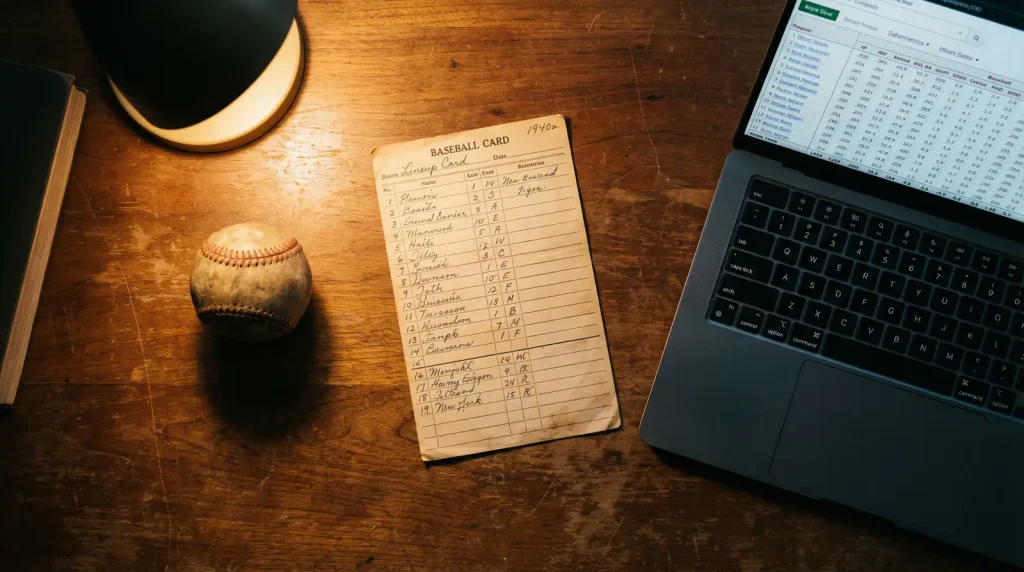
I played daily fantasy baseball for three seasons before I ever took sports betting seriously. When I finally crossed over, I was stunned by how much of my DFS research translated directly to betting. The lineup analysis, the pitcher evaluation, the slate filtering — all of it applied, just to a different wagering format. If you already play DFS, you are sitting on a research foundation that most bettors lack. And if you do not play DFS, understanding how the daily fantasy community analyses games can sharpen your betting in ways that pure sportsbook research cannot.
DraftKings and FanDuel control roughly 72% of the US sports betting market between them. Both companies built their empires on daily fantasy sports before pivoting to sportsbooks, and that shared DNA means the analytical frameworks between DFS and betting overlap more than most people realise.
Translating DFS Research to Sportsbook Bets
The core research for both DFS and sportsbook betting starts in the same place: the starting pitching matchup. DFS players evaluate starters to identify which opposing lineups will struggle (to pick those pitchers for their fantasy roster) and which starters will get hit hard (to “stack” opposing batters). That same evaluation tells a bettor which side of the moneyline has value and whether the total is likely to go over or under.
Lineup construction analysis is another overlap. DFS players scrutinise lineup cards because knowing exactly which nine batters are starting, and in what order, directly affects their fantasy projections. Bettors benefit from the same scrutiny — a resting star, a platoon substitution, a prospect getting his first start — but many bettors skip this step because it requires checking the lineup card 90 minutes before first pitch. DFS players never skip it because their entire entry depends on it. Adopting that DFS-level lineup diligence improves your betting immediately.
Park factors and weather analysis complete the triangle. DFS players adjust their projections for ballpark dimensions, altitude, wind, and temperature because these factors directly affect fantasy scoring. Every adjustment a DFS player makes for environmental factors applies equally to totals betting. The DFS community has developed accessible tools — park factor databases, weather integrations, projection models — that are available to bettors who know where to look.
DFS Ownership as a Public Sentiment Signal for Betting
About 22% of American adults placed a sports bet in the past year, and a meaningful subset of those bettors also play DFS. The overlap between the two communities creates an interesting data point: DFS ownership percentages can serve as a proxy for public sentiment on specific players and games.
When a star pitcher is projected to dominate and draws 40% ownership in DFS tournaments, that concentration tells you the public is heavily invested in his performance. If that pitcher is also the reason the sportsbook favourite is priced at -170, you know the market is loaded with public confidence in one arm. Should that pitcher stumble — an early injury, a bad first inning — the public’s entire position unravels, and contrarian betting opportunities emerge.
DFS ownership data is published for completed contests and projected in advance by several DFS-focused analytics sites. I check projected ownership before each slate to gauge which games and players the casual market is fixated on. High-ownership stacks — where DFS players pile into one team’s offence — often correlate with heavy public moneyline action on that team. If my analysis suggests the other side has value, the high ownership projection confirms that I am swimming against the current, which is exactly where contrarian value tends to live.
How DFS Stacking Logic Applies to Totals and Team Props
Stacking is the DFS strategy of rostering multiple batters from the same team, betting that the team’s offence will have a big game. The logic is straightforward: if one batter in a lineup is going to have a good game, his teammates are also likely to produce because they are all facing the same opposing pitcher and benefiting from the same scoring environment. Runs come in clusters, and stacking captures those clusters.
This same logic applies directly to team total bets at the sportsbook. If I identify a team as a strong stack in DFS — meaning their lineup projects well against the opposing starter, in a favourable park, with supportive weather — that team’s team total over becomes attractive. The DFS stack thesis and the team total over thesis are the same argument expressed in different formats. I frequently use my DFS stack analysis as a shortcut for identifying team total value on the betting side.
The correlation extends to game totals. A slate where DFS projections favour stacking both teams — because both starters are vulnerable and the park is hitter-friendly — is a slate where the game total over has value, provided the posted number has not already captured the expected scoring. I compare the combined projected team totals from DFS models against the sportsbook’s posted game total. When the DFS projections imply a higher combined score than the posted total, the over deserves a closer look.
Where the DFS-to-Betting Analogy Breaks Down
Not everything transfers cleanly. DFS rewards volatility — you want high-ceiling, high-variance plays in tournament formats because you need to beat thousands of opponents with a single entry. Sportsbook betting rewards consistency — you want positive expected value plays that grind out profit over hundreds of bets. A DFS tournament play might be a high-risk HR prop on a power hitter in a launching-pad park. The same play might be too volatile for a sportsbook bettor whose bankroll management demands steadier returns.
DFS also operates without vig. Your fantasy entry fee includes a rake, but the contest itself is a zero-sum game against other players. Sportsbook betting always includes vig on every bet, which means your edge needs to exceed the bookmaker’s margin. A play that is marginally profitable in DFS might be unprofitable at the sportsbook after accounting for the vig. This is particularly relevant for player props, where the sportsbook margin is often higher than on moneylines or totals.
Finally, DFS projections optimise for fantasy points, which are not identical to betting outcomes. A pitcher who throws six innings with seven strikeouts and three earned runs is a strong DFS play (high strikeouts) but might be a poor betting play (his team could lose the game). The metrics that drive DFS scoring and the metrics that drive game outcomes overlap significantly but not completely. Use DFS research as an input, not as a direct translation. The comprehensive MLB betting guide covers the full analytical framework that DFS research plugs into.
Written by the editors at DiamondEdge.
